

Google AdSense Approval Tips for New Blogs in 2026 (Complete Guide)
Want Google AdSense approval for your new blog? Discover the best Google AdSense approval tips in 2026, including SEO, content, website design, essential pages, and expert strategies for faster approval.

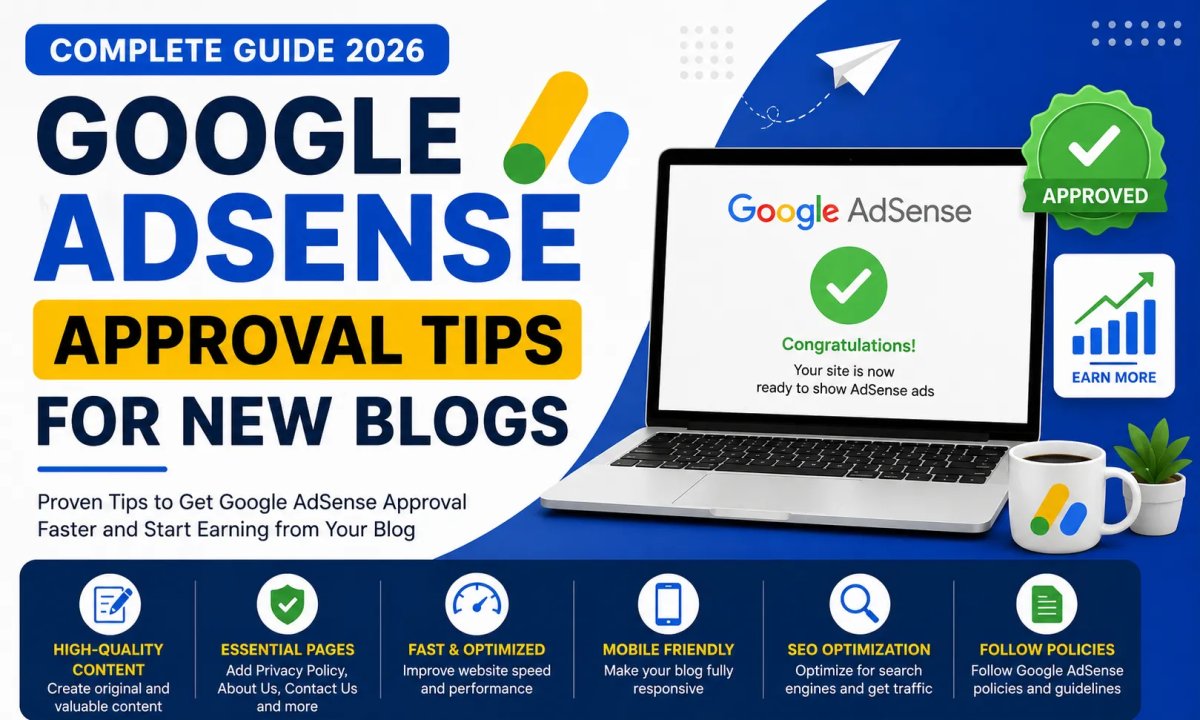
Google AdSense Approval Tips for New Blogs (2026 Complete Guide)
Introduction
Starting a blog is one of the best ways to build an online presence, share knowledge, and even earn passive income. However, for many new bloggers, the biggest challenge comes when they try to monetize their website through Google AdSense. Getting approval is exciting because it allows bloggers to display ads and start earning revenue from website traffic. Yet, many beginners face rejection due to avoidable mistakes such as low-quality content, poor website design, missing pages, or policy violations.
If you are struggling to get approved or planning to apply for the first time, this detailed guide will help you understand exactly what Google expects from a new blog in 2026. Here, you will learn practical and proven Google AdSense approval tips for new blogs that can significantly improve your chances of approval.
Whether you run a technology blog, education website, finance blog, travel blog, or personal niche site, these strategies will help you create a blog that meets Google’s standards and builds long-term earning potential.
What is Google AdSense?
Google AdSense is an advertising network created by Google that helps bloggers and website owners earn money online. Once your website is approved, Google automatically places advertisements on your pages based on your content and visitor interests. Every time visitors view or click on ads, you can earn revenue.
The best thing about AdSense is that you do not need to directly contact companies for sponsorships or advertising deals. Google handles the entire process automatically.
For example, if you run a technology blog, Google may display smartphone, laptop, or software advertisements. If your blog is about fitness, visitors might see ads related to gym equipment or health products.
This system makes AdSense beginner-friendly and one of the easiest monetization methods for bloggers.
Why Do Bloggers Prefer Google AdSense?
There are several reasons why millions of bloggers choose AdSense:
-
Easy to set up
-
Trusted by Google
-
Automatic ad targeting
-
Passive earning opportunity
-
No product selling required
-
Works on almost every niche website
For beginners, AdSense is often the first step toward earning money from blogging.

Why AdSense Approval Matters
Getting approved for Google AdSense is important because it transforms your blog from a simple content website into a money-making platform.
Many new bloggers spend months writing content without monetization. Once approved, they can begin earning from visitors.
1. Passive Income Opportunity
One of the biggest reasons bloggers apply for AdSense is passive income. Unlike freelancing or jobs where you trade time for money, blogging allows you to earn continuously from published content.
For example, if one article ranks on Google Search and receives thousands of visitors every month, ad revenue can continue without constant work.
This makes blogging a long-term business opportunity.
2. No Product Needed
Many online businesses require products or services. AdSense removes this barrier.
You do not need:
-
Inventory
-
Customers
-
Shipping systems
-
Product creation
Simply create helpful content and earn through advertisements.
3. Professional Credibility
An AdSense-approved website often appears more trustworthy and professional. Approval signals that your blog meets Google’s quality standards.
4. Multiple Income Opportunities
Once AdSense is active, bloggers often combine it with:
-
Affiliate marketing
-
Sponsored posts
-
Digital products
-
Freelance services
-
Membership content
This creates multiple streams of online income.
Choose the Right Blogging Niche
Selecting the right niche is one of the most overlooked AdSense approval tips. Many bloggers choose random topics without understanding whether the niche is advertiser-friendly or policy-safe.
A blogging niche is simply the main topic of your website.
Why Niche Selection Matters
Google prefers websites that provide genuine value to users. Choosing a niche with strong demand and advertiser interest improves approval and earning potential.
For example:
A finance website may earn more than a general entertainment blog because advertisers spend heavily in finance.
Best Niches for AdSense Approval
Technology
Technology blogs covering gadgets, apps, software, AI tools, or smartphones often receive fast approval because they offer informational content.
Education
Educational websites covering exams, tutorials, career guidance, and learning resources are highly valuable.
Blogging and SEO
People constantly search for blogging tips, SEO techniques, and website growth strategies.
Health and Fitness
Helpful, safe, and well-researched health content can perform very well.
Business and Finance
Money management, investing, side hustles, and business ideas attract advertisers.
Niches to Avoid
Some categories face rejection more frequently due to policy restrictions.
Avoid:
-
Adult content
-
Gambling websites
-
Illegal downloads
-
Pirated movies
-
Hacking tutorials
-
Copyright material
Even if traffic is good, these niches may violate Google’s guidelines.

Buy a Custom Domain Name
A custom domain name increases trust and professionalism.
Imagine two websites:
bestearningtips.blogspot.com
vs
bestearningtips.com
Which one looks more trustworthy?
Most people prefer websites with custom domains because they appear more established and serious.
Benefits of Using a Custom Domain
Builds Trust
Visitors trust professional websites more.
Better Branding
A custom domain is easier to remember.
Improved SEO
Although domain type alone doesn’t guarantee rankings, branded websites often perform better over time.
Better Approval Chances
Google may view custom-domain websites more professionally.
Tips for Choosing a Good Domain
Choose a domain that is:
-
Short
-
Memorable
-
Easy to spell
-
Relevant to your niche
Avoid:
-
Long names
-
Numbers
-
Complex spelling
A simple domain improves brand identity.
Use a Premium-Looking Blog Design
Blog design matters more than most beginners realize.
Even if your content is excellent, a messy or outdated website may create a poor user experience.
Google values websites that are easy to use.
Why Website Design Matters
Poor design can:
-
Increase bounce rates
-
Confuse visitors
-
Reduce trust
-
Make content harder to read
Features of a Good Blog Design
Clean Layout
Your content should be easy to read.
Avoid too many distracting elements.
Readable Fonts
Use clean fonts and proper spacing.
Visitors should comfortably read articles.
White Space
Avoid overcrowded pages.
Proper spacing improves readability.
Professional Homepage
Your homepage should clearly show:
-
Recent posts
-
Categories
-
Navigation menu
Avoid These Design Mistakes
-
Too many ads before approval
-
Flashy popups
-
Broken links
-
Poor color combinations
-
Slow-loading themes
A clean and minimal design often gets better results.

Create High-Quality Content
Content quality is the biggest factor in AdSense approval.
Google wants blogs that genuinely solve problems and provide value.
What is High-Quality Content?
High-quality content means:
-
Helpful information
-
Proper grammar
-
Good formatting
-
Original writing
-
Clear answers
Your article should fully answer user questions.
Example of Weak Content
“Blogging is good. You can earn money.”
This content is too short and unhelpful.
Example of Better Content
“How to Start a Profitable Blog in 2026: Step-by-Step Beginner Guide”
Detailed, informative content builds trust.
Content Writing Tips
Write Long Articles
Aim for:
1000–2000+ words
Long content often performs better in search engines.
Use Proper Headings
Break content into sections.
This improves readability.
Add Examples
Examples help readers understand concepts faster.
Update Old Content
Keep articles fresh and relevant.
Google values updated information.
Publish Enough Articles Before Applying
One common mistake new bloggers make is applying too soon.
If your website has only 4–5 posts, approval chances are lower.
Google wants evidence that your blog is active and useful.
Recommended Content Amount
Before applying, try to have:
15–30 quality articles
Focus on:
-
Helpful posts
-
Informative guides
-
Original writing
Why More Content Helps
More content signals:
-
Consistency
-
Serious blogging effort
-
Better user experience
A blog with depth appears more trustworthy than an empty website.
Focus on SEO Optimization
Search engine optimization helps your content rank in search engines.
SEO also helps Google understand what your website is about.
Use Proper Keywords
Research keywords people search for.
Example:
Instead of:
“Money Tips”
Use:
“How to Save Money Fast for Beginners”
Specific keywords perform better.
Use Internal Linking
Connect articles together.
Example:
If writing about blogging, link to:
-
SEO guide
-
Affiliate marketing guide
-
Hosting guide
Internal links improve user experience.
Optimize Meta Titles
Strong titles improve clicks.
Example:
Bad:
“Blog Tips”
Good:
“25 Best Blogging Tips to Grow Traffic in 2026”
SEO increases visibility and authority.

Add Essential Pages
One of the biggest reasons many new blogs get rejected by Google AdSense is missing important pages. Google wants websites to appear trustworthy, transparent, and useful for visitors. If your blog lacks essential legal and informational pages, it may look incomplete or unprofessional.
Before applying for AdSense, make sure your website includes all the necessary pages.
About Us Page
The About Us page tells visitors who you are and what your website is about.
This page helps build trust because readers want to know the purpose behind your blog. Google also prefers websites that clearly explain their identity and mission.
Your About page should include:
-
Blog purpose
-
What readers can expect
-
Topics you cover
-
Short introduction about yourself or brand
Example
If your website is about blogging, explain:
“Here, we share blogging tips, SEO strategies, affiliate marketing techniques, and online earning guides for beginners.”
Avoid writing only one or two lines. Create a professional and informative About page.
Contact Us Page
A Contact page shows transparency.
Google wants users to easily contact website owners if needed.
You can include:
-
Email address
-
Contact form
-
Social media links
Having a Contact page improves credibility and professionalism.
Even a simple page saying:
“For business inquiries, contact us at [email protected]”
is better than having no page at all.
Privacy Policy Page
A Privacy Policy page is one of the most important requirements for AdSense approval.
This page explains:
-
How data is collected
-
Cookie usage
-
Advertising information
-
Analytics tracking
Since AdSense uses cookies for personalized ads, Google expects websites to inform users about this.
Without a Privacy Policy, approval chances may decrease significantly.

Disclaimer Page
A Disclaimer page protects your blog and informs users about limitations.
For example:
If you run a finance blog, mention that financial advice is for educational purposes only.
If you run a health website, clarify that readers should consult professionals before making decisions.
This page builds transparency and trust.
Terms and Conditions Page
Although not always mandatory, a Terms and Conditions page makes your blog look more professional.
It outlines:
-
Website rules
-
Content usage terms
-
User responsibilities
A complete website looks more trustworthy to both users and Google.
Improve Website Speed
Website speed plays a major role in both user experience and AdSense approval.
A slow website frustrates visitors.
Imagine opening a blog and waiting 10 seconds for it to load—most users will leave immediately.
Google values fast websites because they improve user satisfaction.
Why Website Speed Matters
Fast websites:
-
Reduce bounce rate
-
Improve user experience
-
Help SEO rankings
-
Increase trust
Slow websites may hurt both rankings and monetization.
Tips to Improve Website Speed
Use Lightweight Themes
Heavy themes often slow down websites.
Choose clean and optimized themes that load quickly.
Avoid unnecessary animations and fancy effects.
Compress Images
Large images can significantly slow your blog.
Before uploading images:
-
Resize them
-
Compress file size
-
Use optimized formats
Smaller image files improve loading speed.
Remove Unnecessary Plugins
Too many plugins can make websites slower.
Only keep plugins that are necessary.
Delete unused or outdated plugins.
Use Good Hosting
Cheap or low-quality hosting may slow down your site.
Reliable hosting improves:
-
Speed
-
Security
-
Uptime
A faster website creates a better experience for visitors.
Enable Caching
Caching stores website files temporarily to improve loading speed.
Many caching plugins can improve performance dramatically.

Make Your Blog Mobile-Friendly
Today, most internet users browse websites on smartphones.
Because of this, Google uses mobile-first indexing.
This means Google primarily evaluates the mobile version of your website.
If your site looks broken on phones, approval may become harder.
Why Mobile Friendliness Matters
A mobile-friendly blog:
-
Improves user experience
-
Reduces bounce rates
-
Increases engagement
-
Helps SEO rankings
Visitors should comfortably read articles on any screen size.
Signs of a Mobile-Friendly Blog
Your blog should have:
Responsive Design
The layout should automatically adjust to different devices.
Whether visitors use:
-
Mobile
-
Tablet
-
Laptop
your website should work smoothly.
Readable Text
Avoid tiny fonts.
Readers should comfortably read content without zooming.
Fast Mobile Speed
Mobile visitors often leave slow websites quickly.
Optimize your website for fast loading on smartphones.
Easy Navigation
Menus should be simple and clickable.
Buttons should not be too small.
Good navigation improves user satisfaction.

Avoid Copyright Content
Copying content from other websites is one of the fastest ways to get AdSense rejection.
Google values originality.
If your content is copied or duplicated, approval chances become very low.
What Counts as Copyright Content?
Copyright issues include:
-
Copying blog posts
-
Stealing images
-
Reusing videos without permission
-
Copy-pasting articles
Even partial duplication can be harmful.
Why Original Content Matters
Unique content helps Google understand that your blog provides value.
Original articles:
-
Build trust
-
Improve rankings
-
Increase authority
-
Improve approval chances
Google prefers blogs with fresh and useful information.
How to Write Original Content
Research Multiple Sources
Read information from several websites, then write in your own words.
Add Personal Insights
Share your own experiences and opinions.
This makes content more unique.
Avoid Rewriting Tools
Poor-quality spun content may appear unnatural.
Always edit and improve content manually.
Use Copyright-Free Images
Images improve blog appearance and readability.
However, using random Google images may violate copyright rules.
Google wants blogs to respect copyrights.
Best Free Image Sources
You can use royalty-free images from:
-
Unsplash
-
Pixabay
-
Pexels
These platforms offer professional-quality images.

Optimize Images for SEO
Always optimize image SEO.
Add ALT Text
ALT text describes images to search engines.
Example:
“Google AdSense approval tips for new bloggers”
Rename Image Files
Bad:
IMG001.jpg
Good:
google-adsense-approval-guide.jpg
Compress Images
Smaller image sizes improve loading speed.
SEO-friendly images help rankings and user experience.
Maintain Proper Navigation
Navigation is one of the most ignored parts of blogging.
If visitors cannot easily find information, they may leave your website quickly.
Google values user-friendly websites.
What Good Navigation Includes
Header Menu
Your main categories should appear clearly.
Example:
-
Home
-
Blog
-
Categories
-
Contact
Search Bar
A search feature helps users find articles quickly.
Footer Navigation
Include important pages in the footer:
-
Privacy Policy
-
About Us
-
Contact Us
-
Disclaimer
Categories
Organize articles into proper categories.
For example:
A blogging website may have:
-
SEO
-
Affiliate Marketing
-
AdSense
-
Traffic Growth
Proper navigation improves user experience.
Write Unique and Helpful Articles
Google rewards websites that genuinely help people.
Thin or meaningless articles rarely get approved.
Instead of publishing short content, focus on quality.
What Makes Content Helpful?
Helpful content:
-
Solves problems
-
Answers questions
-
Provides clear information
-
Includes examples
Readers should leave your website feeling informed.
Write Detailed Guides
Instead of writing:
“Blogging Tips”
Write:
“25 Best Blogging Tips to Grow Traffic Fast in 2026”
Specific articles often perform better.
Understand Search Intent
Ask yourself:
“What does the user really want?”
If someone searches:
“How to get AdSense approval”
they want practical advice—not vague information.
Solve their problem completely.
Avoid AI-Spam Content
AI writing tools are popular in 2026.
However, blindly publishing AI-generated content without editing can be risky.
Google values helpful content—not robotic articles.
Problems with AI Spam
Low-quality AI content may include:
-
Repetition
-
Incorrect facts
-
Poor structure
-
Generic writing
These problems reduce quality.
How to Use AI Correctly
AI should assist—not replace—human effort.
Always:
-
Edit manually
-
Add examples
-
Improve readability
-
Include updated information
Human editing makes content stronger.
Get Organic Traffic
Traffic is not always mandatory for approval, but some organic traffic helps establish credibility.
Organic traffic means visitors coming from search engines.
Ways to Increase Traffic
SEO Optimization
Use keywords people search for.
Publish Consistently
Regular publishing helps search visibility.
Share on Social Media
Promote articles through platforms.
Internal Linking
Link related posts together.
Even small traffic growth helps improve trust signals.
Remove Low-Quality Content
Before applying for Google AdSense, review every article on your website carefully. Many bloggers publish low-value content just to increase the number of posts quickly. However, Google prefers quality over quantity.
A blog with 15 high-quality articles usually performs better than a website with 100 weak posts.
What is Low-Quality Content?
Low-quality content includes:
-
Very short articles with little information
-
Duplicate or copied content
-
Keyword-stuffed posts
-
Poor grammar and formatting
-
Outdated information
-
Articles without clear value
For example:
A 200-word article explaining “How to Start Blogging” without useful steps is unlikely to impress Google.
Instead, create detailed, helpful, and user-focused content.
How to Improve Weak Articles
If you already have weak posts, do not panic.
You can improve them by:
Expanding Content
Add more valuable information, examples, screenshots, and explanations.
Updating Old Information
Outdated information may reduce trust.
Always keep articles fresh and accurate.
Fixing Formatting
Break long paragraphs into smaller sections.
Use:
-
Bullet points
-
Headings
-
Short paragraphs
This improves readability significantly.
Removing Useless Posts
If an article provides little value and cannot be improved, consider deleting it.
A smaller blog with excellent content often gets approval faster.
Check Grammar and Readability
Professional writing creates trust.
Poor grammar and difficult language can make your website appear low quality.
Google values websites that provide positive user experiences.
Why Readability Matters
Visitors stay longer on websites that are easy to read.
Good readability improves:
-
Engagement
-
User satisfaction
-
SEO performance
-
AdSense approval chances
Simple language often performs better than overly complex writing.
Writing Tips for Better Readability
Use Short Paragraphs
Large text blocks feel overwhelming.
Instead of huge paragraphs, keep sentences short and readable.
Write in Simple English
Avoid confusing vocabulary.
Write naturally so beginners can understand.
Use Headings Properly
Headings organize information.
This helps readers scan content quickly.
Check Grammar Mistakes
Grammar errors reduce professionalism.
Use writing tools like grammar checkers to improve quality.
Even small improvements can make your blog look much more trustworthy.
Follow Google AdSense Policies
Google AdSense has strict content policies.
Ignoring these rules can lead to rejection—or even account suspension after approval.
Understanding the rules before applying is extremely important.
Types of Restricted Content
Google may reject websites that include:
Adult Content
Explicit material violates policy.
Violence or Harmful Content
Graphic or dangerous material may not qualify.
Illegal Content
Avoid promoting piracy, hacking, or illegal downloads.
Misleading Information
False claims or spammy content hurt trust.
Copyright Violations
Copied material creates serious approval problems.
Always publish content you own or have permission to use.
Why Following Policies Matters
Policy-safe blogs:
-
Build trust
-
Get approved faster
-
Avoid monetization issues
Before applying, carefully review all content.
Connect Important Tools to Your Blog
Many bloggers forget technical setup before applying for AdSense.
Although these tools may not directly guarantee approval, they improve website quality and professionalism.
Google Search Console
Search Console helps Google discover and index your pages.
Benefits include:
-
Faster indexing
-
Performance tracking
-
Keyword visibility
-
Technical issue detection
A properly indexed website looks healthier to Google.
Analytics Tracking
Website analytics help monitor visitor behavior.
You can track:
-
Page views
-
Traffic sources
-
User engagement
Understanding visitors helps improve content quality.
XML Sitemap
A sitemap helps search engines crawl your website.
Submitting a sitemap improves indexing efficiency.
SSL Certificate (HTTPS)
HTTPS improves trust and security.
Visitors feel safer on secure websites.
Google also prefers secure sites.
If your website still uses:
http://
switch to:
https://
before applying.
Build Trust and Authority
Google values trustworthy websites.
Authority develops when users view your blog as reliable and helpful.
Add an Author Bio
Tell readers who you are.
An author bio creates credibility.
Example:
“Shiva Verma is a blogger passionate about blogging, SEO, and online earning strategies.”
This makes content feel more personal and trustworthy.
Publish Consistently
Consistency signals professionalism.
Instead of posting randomly, follow a schedule.
For example:
-
2 articles weekly
-
3 articles weekly
Regular updates improve website trust.
Improve User Experience
A good user experience means visitors enjoy using your website.
This includes:
-
Fast speed
-
Clean design
-
Helpful content
-
Easy navigation
Happy visitors spend more time on your site.
Build Topic Authority
Instead of writing random topics, focus deeply on your niche.
For example:
If your niche is blogging, publish articles about:
-
SEO
-
AdSense
-
Affiliate marketing
-
Blog traffic
Topic authority improves credibility.
Common Reasons for AdSense Rejection
Understanding rejection reasons helps avoid mistakes.
Many new bloggers unknowingly make these errors.
1. Insufficient Content
Too few posts make websites appear incomplete.
Google wants websites with depth.
Aim for at least 15–30 strong articles.
2. Thin Content
Very short posts rarely help users.
Detailed articles perform better.
3. Missing Essential Pages
Missing:
-
Privacy Policy
-
Contact Us
-
About Us
can hurt approval chances.
4. Copyright Problems
Copied text or images often result in rejection.
Always use original content.
5. Poor Website Design
Messy layouts reduce trust.
Professional design matters.
6. Slow Website Speed
Visitors dislike slow websites.
Speed affects both SEO and user experience.
7. Policy Violations
Restricted or unsafe content may prevent approval.
Always follow guidelines carefully.
Best Practices for Faster Approval
Here is a complete checklist before applying.
Content Checklist
✅ 20–30 high-quality articles
✅ 1000+ words per article
✅ Unique content
✅ Proper formatting
Website Checklist
✅ Custom domain
✅ Fast speed
✅ Mobile-friendly design
✅ Clean layout
Essential Pages Checklist
✅ About Us
✅ Contact Us
✅ Privacy Policy
✅ Disclaimer
SEO Checklist
✅ Proper headings
✅ Keywords optimized naturally
✅ Internal links
✅ Meta descriptions
Technical Checklist
✅ HTTPS enabled
✅ Search Console connected
✅ Sitemap submitted
Following this checklist can significantly improve approval chances.
Future of Google AdSense in 2026
The blogging industry is evolving rapidly.
Google continues improving how ads are shown and how websites are evaluated.
Understanding future trends can help bloggers stay ahead.
Helpful Content Matters More
Google increasingly prioritizes websites that genuinely help readers.
Low-effort blogs may struggle more than before.
AI Detection Will Improve
Google is becoming better at identifying spammy content.
Human-edited and high-value articles will perform better.
Mobile Traffic Will Dominate
More people browse websites using phones.
Mobile optimization will become even more important.
Better Ad Personalization
AI-powered ads may improve user targeting and earnings.
Relevant ads often generate better revenue.
Final Thoughts
Getting approved for Google AdSense is not impossible—it simply requires preparation.
Many bloggers fail because they rush the process or ignore important quality factors.
Instead of applying too early, focus on building a professional website with:
-
Helpful content
-
Strong SEO
-
Good speed
-
Mobile responsiveness
-
Proper pages
Patience matters.
Treat your blog like a real business rather than a shortcut to quick money.
The stronger your website becomes, the easier AdSense approval gets.
Conclusion
Google AdSense remains one of the best monetization options for new bloggers in 2026. However, approval is no longer as simple as creating a few posts and applying immediately.
Google wants websites that provide real value to users.
If you focus on high-quality content, clean website design, SEO optimization, mobile friendliness, trust-building pages, and policy compliance, your chances of approval increase dramatically.
Take time to build a strong foundation before applying.
A professional blog not only gets approved faster but also earns better revenue in the long run.
Success in blogging starts with quality, consistency, and patience.
Frequently Asked Questions (FAQs) About Google AdSense Approval for New Blogs
What's Your Reaction?
 Like
0
Like
0
 Dislike
0
Dislike
0
 Love
0
Love
0
 Funny
0
Funny
0
 Wow
0
Wow
0
 Sad
0
Sad
0
 Angry
0
Angry
0











Comments (0)